High-power electronics function as essential components that drive modern technological systems that power electric vehicles, industrial drives, LED lighting systems, renewable energy configurations, and advanced consumer electronics. The electrical engineering field currently faces its largest challenge because engineers must develop solutions that enable thermal maintenance and electrical reliability.
The traditional FR4 PCB layout has the disadvantage of thermal boundaries that may not allow the circuit to function properly when there is a high-power usage scenario. Such limitation has seen the wide use of custom- aluminum PCB board design, a specialized methodology that incorporates a metal core, usually aluminum, into the PCB structure to enhance heat dissipation and system reliability. The system requires aluminum PCB thermal management materials because they define the effectiveness of heat movement and temperature control throughout the operational environment.
The process of designing custom aluminum PCBs requires engineers to create thermal paths, circuit designs, dielectric components, and mechanical elements that satisfy defined project demands. This article explores the complete design process, materials, advantages, challenges, and applications of aluminum PCBs in high-power electronics.
1. What is a Custom Aluminum PCB?

A custom aluminum PCB serves as a metal-based printed circuit board that engineers built to meet the needs of specific high-power applications. The design of this system allows it to manage three different types of operating conditions, which include:
- High current loads
- Elevated thermal output
- Compact mechanical constraints
- Harsh operating environments
The system contains three fundamental components, which include:
- The copper circuit layer, which provides electrical conductivity
- The dielectric thermal layer, which functions as both insulation and a heat transfer mechanism
- The aluminum base layer, which enables heat dissipation
The custom designs use special requirements to create optimal performance through their specific product design.
2. Importance of Custom Aluminum PCB Design in High-Power Electronics
High-power systems create excessive heat because of their massive electrical current and high power requirements. Uncontrolled heat buildup leads to:
- Component failure
- Reduced efficiency
- Thermal runaway
- Shortened device lifespan
The custom aluminum PCB design solves these problems through its three main benefits, which include:
- Enhanced heat dissipation
- Improved current handling capability
- Increased system reliability
- Reduced the size and weight of thermal management systems
3. Key Design Elements of Custom Aluminum PCBs
Successful custom aluminum PCB design requires designers to achieve equilibrium between thermal requirements, electrical demands, and mechanical needs to build PCBs that operate safely under conditions of high power usage.

1. Thermal Design Optimization:
Aluminum PCB design requires designers to prioritize thermal management because this factor determines both device performance and operational lifespan. Designers need to create systems that enable active components to transfer heat to the aluminum base at high speed and with high efficiency. Designers achieve this through direct thermal pathways that minimize thermal resistance and improve heat flow.
The application of high-conductivity dielectric materials results in better heat transfer capabilities while still providing electrical insulation. Correct component arrangement enables heat to move throughout the board space and eliminates areas of excessive heat accumulation. Thermal vias function as efficient conduits that transmit thermal energy between different layers of the structure. Other key practices include:
- Increasing copper thickness for better heat spreading
- Using thermal pads under high-power components
- Ensuring uniform heat distribution across the PCB
2. Electrical Layout Design:
Designers need to achieve electrical performance maximization through their work while maintaining thermal system efficiency. Designers aim to create current paths that remain both short and direct because this approach decreases resistance while decreasing power consumption. Designers use wide copper traces to handle higher current demands, which occur in power-intensive applications. Grounding design establishes stable circuits that experience decreased noise disturbances. The team uses EMI reduction techniques to protect signal clarity throughout the project. Additional considerations include:
- Minimizing signal loop areas
- Separating high-power and low-power sections
- Ensuring balanced current distribution
3. Mechanical Design Considerations:
Mechanical design guarantees the PCB stays stable while experiencing physical stress and environmental conditions. The board thickness selection process must choose the right thickness to achieve the needed strength and flexibility. Structural reinforcement protects high-stress areas from both deformation and complete failure. Vibration resistance serves as a vital system component in automotive and industrial environments because it ensures equipment operates reliably throughout extended periods. The study includes:
- Stress distribution analysis during design
- Reinforcement near mounting points
- Resistance to thermal expansion and contraction
4. Materials Used in Custom Aluminum PCB Design:
| Layer | Material | Properties | Function |
|---|---|---|---|
| Circuit Layer | Copper | Electrical conduction | High conductivity |
| Dielectric Layer | Epoxy / Ceramic composite | Insulation + heat transfer | Thermal conductivity |
| Base Layer | Aluminum | Heat dissipation | High thermal capacity |
| Solder Mask | Polymer coating | Protection | Chemical resistance |
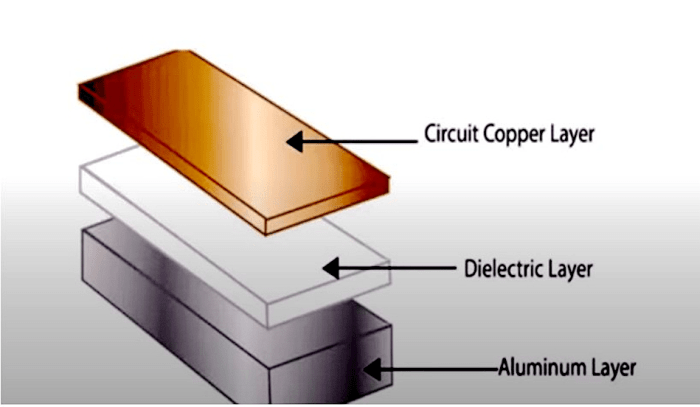

1. Copper Layer:
Copper functions as the electrical conductor that distributes thermal energy throughout the board.
2. Dielectric Layer:
This layer serves as the main component for thermal design purposes because it needs to deliver both electrical insulation and effective heat transfer capabilities.
3. Aluminum Base:
The aluminum base functions as a heat sink, which efficiently transfers thermal energy to the surrounding environment.
5. Manufacturing Process of Custom Aluminum PCBs:
The manufacturing of custom aluminum PCBs requires the systematic execution of exacting assembly procedures, which generate superior thermal properties, electrical dependability, and material strength.

1. Material Selection:
It is initiated by a proper choice of pcb materials according to the needs of the application, like the power rating, thermal load, and environmental conditions. Selection incorporates the quality of aluminum cores, dielectric layers, and copper foils, which will help in advancing the heat dissipation and electrical stability. The material compatibility must be ensured since any breach will cause delamination and thermal breakdown.
2. Circuit Patterning:
It starts with photolithography, which precisely duplicates the circuit pattern onto the copper trace. This is followed by chemical etching, which removes excess copper to form accurate conductive tracks required in electrical operation.
3. Lamination Process:
The controlled application of heat and pressure creates bonds between the copper layer and the dielectric material and the aluminum base. The lamination process establishes a powerful single unit that guarantees both mechanical strength and efficient thermal heat transfer.
4. Drilling and Finishing:
The process begins with hole drilling, which allows for both component mounting and electrical connections. The process begins with drilling, then surface finishing operations are completed to achieve three goals, which include improving solderability, protecting copper surfaces, and enhancing the long-term reliability of the product.
5. Testing and Quality Control:
Each PCB undergoes rigorous testing:
- Thermal cycling tests
- Electrical continuity testing
- High-voltage insulation tests
- Load testing under high current conditions
6. Advantages of Custom Aluminum PCB Design:

1. Superior Thermal Performance:
This application provides exceptional heat dissipation, in which such high temperatures can be managed without exceeding the safe operating temperature for the critical components in the circuit and, thus, avert cases of overheating in highly demanding fields.
2. High Current Handling Capability:
When increased copper thickness, wide copper traces, and a metal core are used, the PCB can support currents (power) up to a set limit, which is best suited for the power-intensive circuits.
3. Compact System Design:
What is offered by the integrated thermal management is to reduce, if not eliminate, the need for external heat sinks and other substantial cooling components, thus helping to create a system that is much smaller and more space-efficient in terms of overall design.
4. Improved Reliability:
Aluminum PCBs tend to promote the reliability of the actual system as a result of a reduction in thermal stress for the components. There is also a significantly greater lifetime for components.
5. Cost Efficiency in the Long Term:
Although initial costs can be significantly higher, reduced failures, lower maintenance needs, and enhanced field durability lead to far superior long-term cost efficiency and life-cycle value.
7. Applications of Custom Aluminum PCBs in High-Power Electronics:
1. LED Lighting Systems:

Custom aluminum PCBs are preferred in high-power LED applications because they provide superior heat dissipation characteristics. The system maintains consistent brightness while providing extended operational duration because it effectively manages heat. Automotive headlights require this technology to produce a steady light output during different temperature fluctuations. Industrial floodlights utilize this technology because it allows them to operate at full capacity without experiencing any decline in output performance.
2. Power Electronics:
Aluminum PCBs serve a vital function in power electronic systems because they control the heat that results from high current demands. The components function as vital elements in inverters, converters, and power supplies because they provide essential thermal stability and electrical efficiency, which creates dependable operation and effective power transformation.
3. Automotive Industry:
The automotive sector depends heavily on custom aluminum PCBs for electric vehicle battery systems, motor control units, and power distribution modules. These applications require high reliability and vibration resistance, together with efficient thermal management to ensure safe and stable vehicle operation.
4. Renewable Energy Systems:

Aluminum PCBs find use in renewable energy applications, which include solar inverters and wind energy controllers. The system achieves operational efficiency because they control the temperature that emerges from ongoing energy conversion activities.
5. Industrial Equipment:
Industrial systems depend on aluminum PCBs to power their motor drives, welding machines, and high-power control units through their capacity to perform under extreme conditions. The product demonstrates durability and thermal efficiency, which makes it suitable for continuous operation in heavy industrial environments.
Conclusion:
The custom aluminum PCB design process functions as a fundamental component that enables contemporary high-power electronic systems to achieve exceptional electrical capabilities while maintaining effective thermal management. The PCBs operate under intense thermal and electrical stress because their designers based their work on specific materials and established circuit design rules, and used advanced production techniques. The system functions effectively in high-demand situations, which include LED lighting systems, automotive electronic systems, renewable energy facilities, and industrial power systems.
The demand for custom aluminum PCB design services will increase as electronic devices evolve toward higher power outputs, smaller dimensions, and more advanced features. Advanced electronic systems need this solution to maintain their operational capacity and protect their users while providing extensive protection against hardware failures.
Custom aluminum PCB design services will optimize your high-power electronic product development because they improve efficiency, product reliability, and extend product longevity. Your designs will come to life through collaboration with established PCB manufacturers.